
Are you looking for Loans?
Check your Free CIBIL Score here
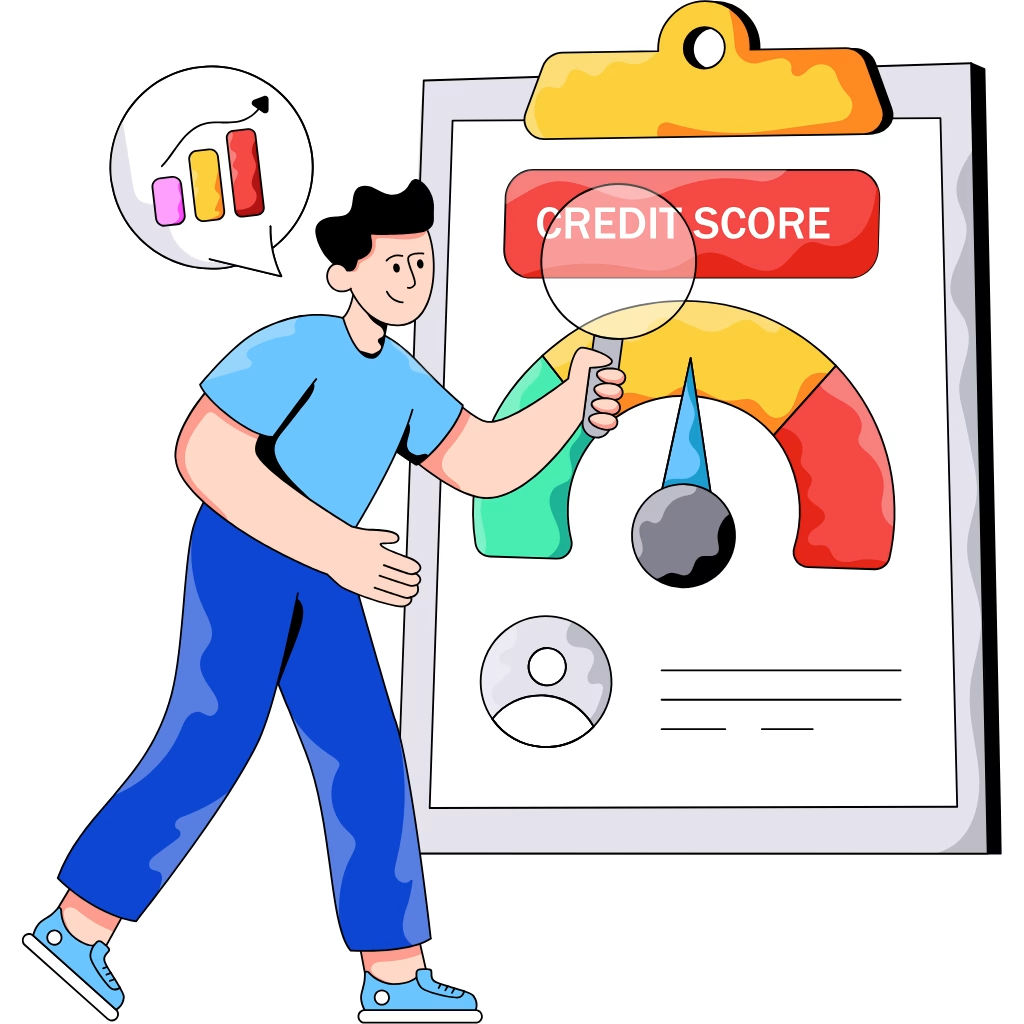
Understand Your Credit Score and Unlock Financial Opportunities
Monitor your CIBIL score instantly, identify areas for improvement, and accelerate your loan approval journey with Mindfin.
What is a CIBIL Score and Why Does It Matter?
Your CIBIL score is a three-digit number (300-900) that represents your creditworthiness to lenders. It’s one of the most critical factors that financial institutions consider when reviewing your loan application.
A CIBIL score is generated based on your credit history—including payment patterns, outstanding debts, credit utilization, and the types of credit you use. Think of it as your financial report card that tells lenders how reliably you repay your debts.
At Mindfin Ser, we understand that your credit score directly impacts your ability to secure loans at favorable interest rates. Whether you’re applying for a home loan, personal loan, business loan, or car loan, a healthy CIBIL score can make all the difference between approval and rejection.
Key Points
- Score Range: 300 to 900
- Higher Score: Better loan approval chances and lower interest rates
- Lower Score: May result in loan rejections or lower interest rates
- Generated by: Credit Information Bureau (India) Limited (CIBIL)
Understanding CIBIL Score Ranges
|
Score Range
|
Category
|
Approval Chances
|
Interest Rate Impact
|
|---|---|---|---|
What Factors Impact Your CIBIL Score?
Understanding what influences your CIBIL score is the first step toward improvement. Here are the key factors:
1. Payment History (35% Weight)
Your track record of paying bills and EMI on time is the most significant factor affecting your score.
- Positive Impact: Consistent on-time payments
- Negative Impact: Late payments, missed EMIs, defaults
2. Credit Utilization (30% Weight)
The ratio of your outstanding credit to your total available credit limit.
- Optimal Range: 30-40% utilization
- Impact: High utilization (over 80%) reduces your score significantly
3. Credit Mix (15% Weight)
The variety of credit types you use—secured loans, unsecured loans, credit cards.
- Positive Impact: Healthy mix of secured and unsecured credit
- Impact: Only one type of credit limits score growth
4. Credit Tenure (10% Weight)
How long you’ve maintained active credit accounts.
- Positive Impact: Longer credit history demonstrates stability
- Avoid: Closing old accounts; maintain them to boost tenure
5. Inquiries (10% Weight)
Hard inquiries when you apply for new credit can slightly impact your score.
- Positive Practice: Avoid multiple applications in a short period
- Impact: Each hard inquiry temporarily reduces your score by a few points
Proven Strategies to Boost Your CIBIL Score
A lower CIBIL score doesn’t define you permanently. With disciplined financial habits, you can improve it significantly within 6-12 months.
Quick Wins (Immediate Actions)
1. Pay Your Bills on Time
- Set up automatic payment reminders for all bills and EMIs
- Never miss a payment deadline—even a single late payment can hurt your score
- If you’ve missed payments, start paying on time immediately to reverse the damage
2. Reduce Your Credit Utilization
- Aim to use only 50-70% of your available credit limit
- Pay down existing credit card balances
- Request credit limit increases to improve your utilization ratio
3. Clear Outstanding Dues
- Prioritize paying off high-interest debts first
- Contact creditors if you’re struggling to pay to negotiate payment plans
- Avoid new credit applications until you’ve reduced existing debt
Long-Term Strategies (3-6+ Months)
4. Maintain a Healthy Credit Mix
- Balance secured loans (home loans, car loans) with unsecured credit (personal loans, credit cards)
- Avoid closing old credit accounts—keep them active
- Don’t take unnecessary loans just to diversify; borrow only when needed
5. Monitor Your Credit Report
- Check your CIBIL report annually for errors
- Report inaccuracies to CIBIL immediately
- Keep track of your progress as you improve your financial habits
6. Build a Longer Credit History
- Keep old credit accounts open, even after paying them off
- Don’t frequently switch credit providers
- A longer credit history demonstrates financial stability